
Oven Cleaning
Team
Payment
What is included in the service?
- Ovens and hobs: Thorough cleaning of the oven interior and exterior, including the removal of baked-on grease, burnt food residues, and grime from the oven racks, doors, and hobs.
- Kitchen Hoods: Complete degreasing and cleaning of kitchen hoods and their filters to ensure they work efficiently and remain free from sticky buildup.
- Microwave Ovens: Detailed cleaning of both the inside and outside of microwave ovens, removing food splatters, grease, and odors.
- Fridges: Full interior and exterior cleaning of fridges, including shelves, drawers, and door seals. The service eliminates food residues, stains, and any unpleasant odors.
How to prepare your home?
- Provide access to electricity and water.
- Empty the oven and remove all unnecessary items from the hobs to make cleaning easier.
- Before cleaning, all food products should be removed from the refrigerator and the freezer, and magnets and personal belongings should be removed.
How long does the service take?
Why use professional cleaning?
What's the expected end result?

Oven cleaning prices
Transparent prices, fixed at the time of booking. The service is performed at the customer's home — ovens, hobs, hoods and microwaves are degreased and disinfected inside and out.
- 1 oven and 4 hobs from 17.9 €
- 1 kitchen hood from 8.2 €
- 1 fridge from 12.8 €
- 1 microwave oven from 5.1 €
Prices are indicative, based on the lowest available offer from companies on the platform. The exact price for your home is confirmed at the time of booking.



What accumulates inside the oven and why is it a problem?
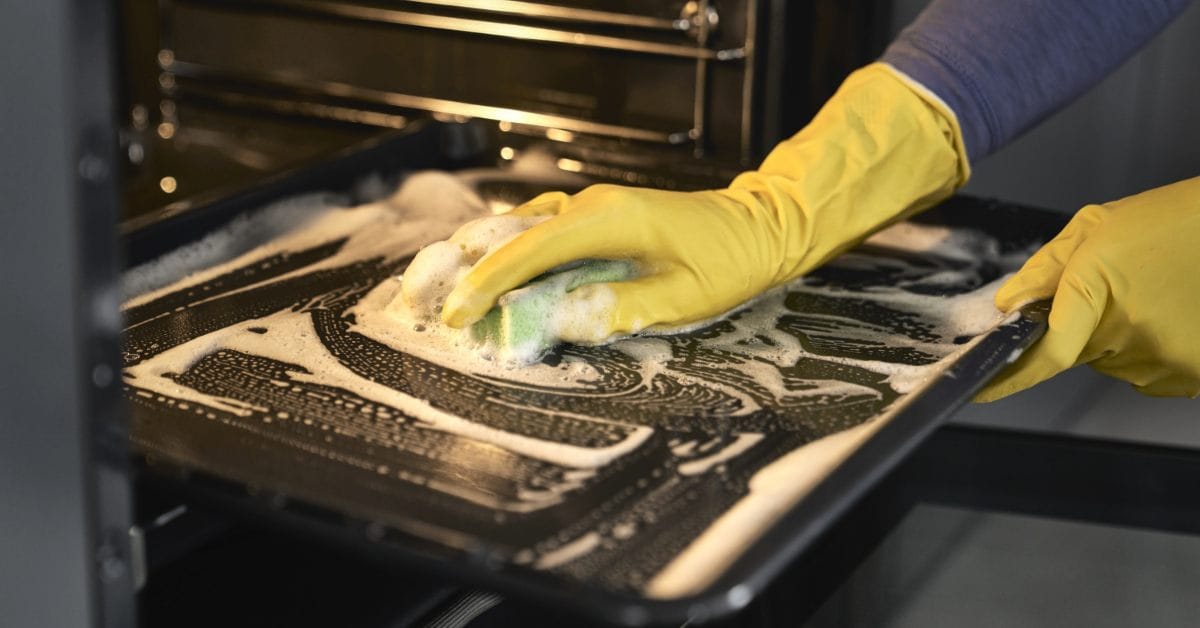
Understanding the nature of oven contamination helps explain why professional cleaning is significantly more effective than DIY methods. The substances that build up inside your oven are not simple dirt — they are chemically transformed compounds that require specialised treatment.
- Polymerised fats and oils When cooking oils are heated repeatedly, they undergo oxidation and polymerisation. This creates a varnish-like coating that bonds chemically to enamel and metal surfaces. Unlike fresh grease, which can be wiped away with detergent and water, polymerised fat is insoluble in water and highly resistant to most household cleaning products. It forms a glossy, amber-to-brown layer that gradually darkens with each cooking cycle.
- Carbonised food residues Sugars, proteins and starches that spatter onto hot surfaces char into carbon. These carbon deposits are extremely hard — sometimes as hard as the enamel beneath them. They act as thermal insulation, disrupting the even distribution of heat throughout the oven cavity. Attempting to scrape them off without proper technique risks scratching or chipping the enamel, which leads to rust and further deterioration.
- Smoke residues and volatile compounds Incomplete combustion of fats releases smoke particles and volatile organic compounds (VOCs). These condense on cooler surfaces — particularly the door glass, the fan housing and the light cover — leaving a greasy, brown film. Every time the oven heats up, this film re-emits odour and contributes to the smoky haze that fills poorly ventilated kitchens.
- Condensation stains between door glass panels Steam from cooking condenses between the glass panels of the door, carrying dissolved grease and mineral particles. As the moisture evaporates, it leaves behind streaks and spots that cannot be reached without disassembling the door. Over time these stains build up into an opaque layer that blocks your view of the food inside.
Why does this matter for your kitchen?
These contaminants affect the oven in multiple ways:
A dirty oven works harder to reach temperature, increasing energy consumption. Heat distribution becomes uneven, leading to inconsistent cooking results. Old residues release stale aromas that transfer to fresh food. Smoke and volatile compounds degrade indoor air quality. Most importantly, accumulated grease is highly flammable and can ignite at grill temperatures.
Professional cleaning removes these layers completely, restoring proper heat flow, eliminating odours and reducing safety risks.
How does professional oven cleaning work?
Professional oven cleaning is a structured and systematic process that goes far beyond what can be achieved with household products and basic tools. Each stage is designed to maximise cleaning effectiveness while protecting the appliance from damage and ensuring complete safety for future use. The process typically unfolds in the following way.
- Initial inspection and assessment Before any cleaning begins, the technician carries out a thorough inspection of the oven. This includes a visual assessment of the interior to identify areas of heavy soiling such as the ceiling, walls, floor, heating elements and fan housing. The type of oven is identified — whether built-in, freestanding, double oven, range cooker or combination microwave-oven — as each requires slightly different handling. The technician also checks for existing issues such as chipped enamel, damaged seals, faulty hinges or worn heating elements that may need attention. Finally, any specific concerns raised by the client, such as persistent odours, smoke during preheating or uneven cooking results, are discussed. This initial assessment ensures that the cleaning approach is tailored precisely to the condition and type of the appliance.
- Protection of the kitchen area Before work begins, the surrounding kitchen area is carefully protected. Floors are covered with drop cloths or plastic sheeting to catch drips and debris, while worktops are protected to provide a clean and safe surface for disassembled components. Ventilation is also checked to ensure adequate airflow throughout the cleaning process.
- Disassembly of removable parts To achieve a truly thorough clean, all removable parts are taken out of the oven. This includes racks and shelves, which are typically heavily coated with baked-on grease, as well as baking trays and roasting tins if present. Side runners and shelf supports are removed, as these components often accumulate grease and burnt residue. In most cases, the oven door is removed entirely to allow access to the hinges and to enable cleaning between the glass panels. The inner and outer glass panels are separated so the space between them can be cleaned properly. Some ovens also have a removable floor panel, which is lifted out to access and clean the area around the lower heating element. Careful disassembly ensures that every component can be cleaned individually and that no hidden areas remain inaccessible.
- Application of professional degreasers Professional oven cleaning solutions are specifically formulated to break down polymerised fats and carbonised residues that household products cannot handle. These typically include alkaline-based degreasers with controlled pH levels that dissolve carbon bonds without damaging enamel, as well as gel formulations that cling to vertical surfaces and allow extended contact time on walls and ceilings. Fume-free or low-fume options are used to minimise odour and irritation in domestic environments. The degreaser is applied generously to all interior surfaces and left to dwell. Depending on the severity of contamination, this dwell time usually ranges from 15 to 45 minutes, and longer for heavily neglected ovens.
- Soaking of removable components While the interior surfaces are being treated, removable components undergo their own cleaning process. Racks and shelves are placed in a soaking tank or sealed bag with a professional degreasing solution, allowing the product to penetrate baked-on grease from all angles. Glass panels are laid flat and treated with glass-specific cleaners that remove grease and mineral deposits without scratching. Metal runners and supports are soaked alongside the racks. Soaking is far more effective than surface scrubbing, as it softens hardened deposits throughout the entire component, including areas that are difficult to reach manually.
- Manual cleaning and detailing Once the degreaser has had time to work, the technician begins the careful physical removal of loosened residues. Non-abrasive scrubbing pads are used on enamel surfaces to lift softened carbon without scratching. Plastic scrapers are employed to remove stubborn deposits from corners and edges, while specialised brushes reach into crevices around heating elements and fan housings. Detail tools are used to clean around control knobs, hinges and seal grooves. This stage requires experience and precision, as aggressive scrubbing or the use of metal tools can damage enamel, leading to rust and further deterioration. Professional technicians know exactly how much pressure to apply and which tools are safe for each surface type.
- Cleaning of heating elements and fan Heating elements and the convection fan are critical components that require especially careful handling. Carbon deposits are removed from the area surrounding the upper grill element without applying chemicals directly to the element itself. If accessible, the area beneath the lower heating element is cleaned after removing the floor panel. In fan-assisted ovens, grease-laden fan blades and the surrounding housing are cleaned to restore proper airflow and eliminate burnt odours. The fan cover or grille is removed, cleaned and refitted. Proper cleaning of these components restores heating efficiency and prevents the burning smell that occurs when grease ignites during preheating.
- Door and glass panel cleaning The oven door receives special attention because it affects both appearance and functionality. The door is fully disassembled to separate the inner and outer glass panels, which are then cleaned individually on both sides to remove the brown condensation stains that accumulate between layers. The door seal is cleaned of grease and debris that can prevent proper closure, and the hinges are wiped down and checked to ensure smooth operation. The door is then carefully reassembled and aligned to ensure it closes properly and retains heat effectively. After this process, the door glass is fully transparent, allowing clear visibility of food during cooking.
- Rinsing and residue removal All cleaning agents must be completely removed to ensure food safety and prevent chemical odours during future use. Interior surfaces are thoroughly wiped with clean, damp cloths, often in multiple passes, to remove every trace of degreaser. Special attention is given to corners and crevices where residue can accumulate. A final inspection under good lighting confirms that no chemical film remains.
- Drying, polishing and reassembly Before reassembly, all surfaces are dried and finished. Interior surfaces are wiped dry to prevent water spots, glass panels are polished to a streak-free shine, stainless steel surfaces (where present) are polished with appropriate products, and enamel surfaces are gently buffed to restore their original lustre. All components are then carefully reinstalled.
- Testing and client walkthrough The service concludes with a final verification and handover. The oven is briefly heated to confirm correct operation and to ensure there is no smoke or residual odour. The technician then walks the client through the results, highlighting any areas of concern such as worn seals or damaged enamel that may require future attention. Practical maintenance advice is also provided to help keep the oven clean between professional visits.
Frequently Asked Questions
What is the price?
Companies set their own prices on the Domestic platform. The price may depend on the quality of the detergents they use, as well as the company's history and the skills of the employees. Compare the offers of all companies by clicking the "See Prices" button.
What is included in the oven and hobs cleaning?
The deposits on the hob are cleaned using professional anti-grease detergents (most of them leave an odor of a professional cleaning product for several hours). The oven is cleaned from outside and inside. For a deep clean, the oven racks, grills, and tray are removed and soaked in a container of hot water and detergent, which facilitates the removal of grease and residue. For more stubborn surfaces, a scouring pad and a stainless steel brush are used to ensure effective cleaning of the walls, trays, and racks. A mixture or paste of baking soda, vinegar, and lemon or limes is also prepared and applied to stubborn stains to loosen the dirt. A sponge, cloth, and paper towel are then used to remove residue and dry all surfaces, leaving the oven clean and residue-free.
What is included in the kitchen hood cleaning?
Kitchen hoods are cleaned thoroughly on the exterior to remove sticky grease deposits. Filters are taken out, degreased, and cleaned before being reassembled. The interior parts of the hood, including the filter box, are also wiped down to ensure smooth operation and reduce fire hazards from grease buildup.
What is included in the microwave cleaning?
Food splatters and stains inside the microwave are removed using specialized cleaning agents. The rotating plate is taken out, cleaned separately, and then put back in. The exterior is cleaned to remove fingerprints, stains, and any traces of food, leaving the microwave looking and smelling fresh.
What is included in fridge cleaning?
Before cleaning, all food items must be removed from the refrigerator, and magnets or personal items taken off. The fridge is then cleaned thoroughly inside and out, including shelves, drawers, and door seals. The freezer is also cleaned, though it is recommended that it be defrosted beforehand for the best results. Note that ice buildup is not removed during the cleaning process.
How long does it take to clean the oven and fridge?
The time required for cleaning depends on the level of dirt and buildup in the appliances, but on average, it takes between 2 and 4 hours to clean both the oven and fridge.
Does cleaning your oven help if the unpleasant smell only occurs occasionally?
Yes. Even occasional smells can be a sign that there are burnt deposits that are reactivated at higher temperatures. A thorough cleaning can significantly reduce this discomfort and make using your oven more enjoyable, especially if you are cooking for family or guests.
Why does your oven sometimes smoke, even if you haven't spilled anything recently?
Smoke is often caused by old dirt that burns off every time you use your oven. Even if nothing has been spilled that day, existing deposits can heat up and produce smoke. A thorough cleaning will greatly reduce this problem.
How can I keep my oven clean more easily after a professional cleaning?
The easiest way is to wipe up spills immediately after the oven has cooled down and to prevent spills by using suitable trays or additional protection when cooking dishes that leave a lot of sauce or fat. Simple, constant maintenance will save you from heavy deposits.
Is it worth scheduling an oven cleaning if I don't use it very often?
Yes, especially if there is old deposits left or if the oven has been used intensively over a certain period. Even rare use can "reactivate" unpleasant odors if deposits are there. A cleaning helps you keep the appliance in optimal condition and use it without any discomfort.
What should I avoid before scheduling, so as not to make cleaning more difficult?
Avoid turning on the oven just before cleaning, because the appliance must be completely cold. It is also not recommended to apply multiple different solutions on the same day – sometimes improvised combinations can create strong odors or make dirt harder to remove.
Is oven cleaning also suitable for a rented apartment before handover?
Yes, and it is one of the most appreciated interventions when handing over a home. A clean oven immediately changes the impression of hygiene of the kitchen and can eliminate odors left over from previous uses.
Does the oven need to be completely cooled down before the appointment?
Yes, ideally, the oven should be cooled down. This ensures safe and efficient cleaning. If you've been cooking or baking shortly before the appointment, simply turning off the oven and opening the door is often sufficient to allow it to cool down more quickly.
Can you also clean the oven rack and baking tray?
Yes. Accessories like racks are included in the cleaning, provided they belong to the oven and are accessible. This is especially helpful because burnt-on residue often accumulates here, which is difficult to remove in everyday use.
Is the refrigerator unplugged during cleaning?
Generally, it is not necessary to unplug the refrigerator as long as the cleaning focuses on accessible interior and exterior surfaces. It is especially important that the refrigerator is empty so that shelves, seals, and surfaces can be thoroughly cleaned.
What should I do after cleaning before using the oven again?
After cleaning, it's advisable to ventilate briefly and, if necessary, heat the oven empty once to prevent residual moisture from lingering on the interior. After that, you can use the appliance as usual. In everyday use, it helps to remove fresh splashes as soon as possible to maintain the cleanliness for longer.
Feedback
After the job is done, you will be able to comment and evaluate the provider's professionalism. Your rating will affect the overall rating of your company, and your comment will be visible to all future users.
How to select a cleaning company?
Based on multiple criteria, representing professionalism, persistency, expertise and efficiency, Domestina provides Recommended Choice. When you start your order, you'll see the recommended company on the first place of the company list.
Self-cleaning vs. professional cleaning: Which option guarantees better results?
Many modern ovens include a pyrolytic or steam self-cleaning function. Pyrolysis is an advanced method that uses high temperatures to break down dirt and grease, facilitating automatic oven cleaning. Although useful, these options are not a complete solution. Pyrolysis does not remove the toughest grease unless it is removed first. Furthermore, it generates temperatures of up to 500°C, which can affect gaskets, handles, or interior enamel if not properly maintained. To remove stubborn residue from the glass or oven walls, we recommend using a scraper, a professional accessory that helps effectively remove stubborn residue.
On the other hand, oven cleaning performed by specialists ensures the manual removal of stubborn residue without damaging the surfaces. Specific products are used that dissolve grease without abrasion and techniques that allow access to areas that automatic systems cannot reach. The result is a cleaner, safer, and longer-lasting oven.
For example, in ovens with a top grill, grease residues char in elevated areas where the heat doesn't reach them directly. Only meticulous manual work can ensure that this area is free of residue. Furthermore, in older ovens or those without a self-cleaning function, this service is the only possible way to achieve a complete restoration.
The role of the oven in daily life
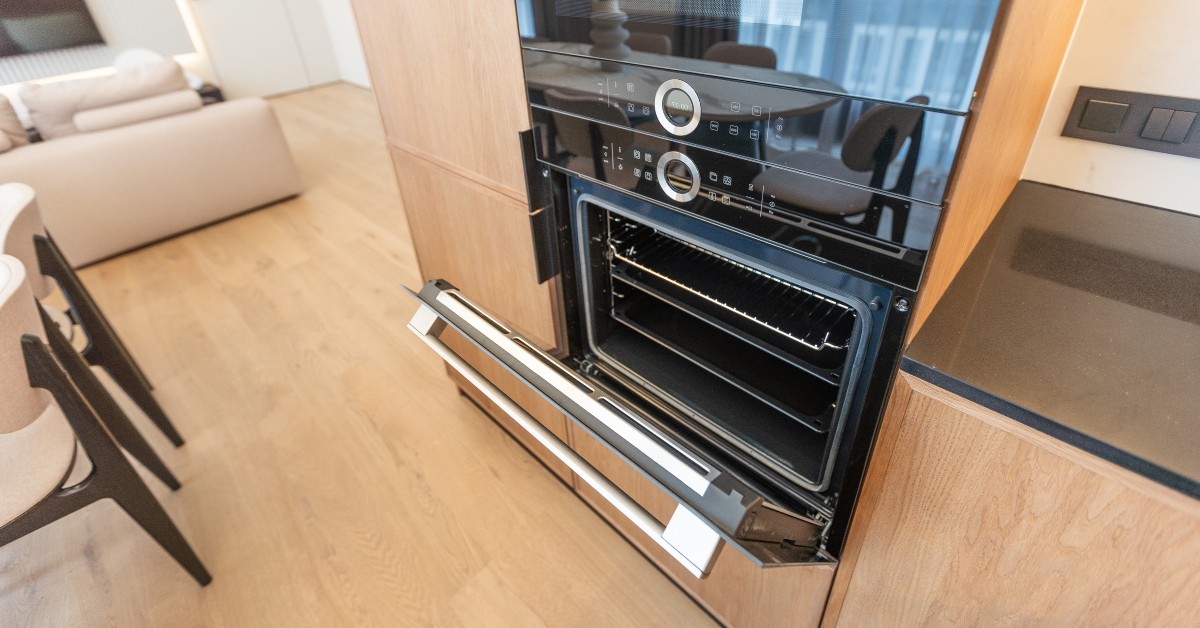
Few household appliances endure as much thermal and chemical stress as the oven. Roasting a chicken, baking a lasagne, grilling vegetables or preparing a Sunday roast all generate fat vapour that rises, circulates and settles on every interior surface. The physics and chemistry of this process explain why ovens become so difficult to clean over time.
At temperatures above 150°C, fats begin to break down and oxidise. Above 200°C they polymerise into sticky, resinous films that bond chemically to enamel and metal surfaces [3]. Above 250°C these films carbonise into hard, black deposits that resist water, household detergents and even vigorous scrubbing.
This process is cumulative and relentless. A single cooking session leaves only a thin, almost invisible film. But after dozens or hundreds of uses, that film becomes a thick, stubborn layer that no ordinary cleaning product can remove. The buildup is most severe in zones of highest heat and airflow:
- The ceiling directly above the heating element or grill, where rising heat concentrates fat vapour.
- The rear wall around the convection fan intake, where circulating air deposits grease on the fan housing and blades.
- The floor where dripping fats pool and bake into hardened puddles.
- The door seal area where condensation and grease meet, creating a sticky residue that degrades the seal over time.
- The narrow cavity between the inner and outer door glass panels, where vapour condenses and leaves brown streaks that cannot be reached without disassembly.
Because the oven door usually remains closed during and after cooking, homeowners often underestimate the extent of contamination. The problem becomes visible only when smoke billows out upon preheating, when persistent odours refuse to dissipate, or when the door glass becomes so clouded that you cannot monitor your food. By that stage the deposits are fully hardened and require professional intervention to remove safely and completely.
Health, air quality and safety considerations
A contaminated oven is not just an aesthetic issue. Each heating cycle causes old fats to re-liquefy and smoulder, releasing fine particulate matter and volatile organic compounds into the kitchen air. In poorly ventilated spaces, this can irritate the eyes and respiratory system and worsen conditions such as asthma.
Residual odours trapped in carbonised grease are released during cooking and transferred to food. Baking, delicate proteins and fermented doughs are particularly sensitive to flavour contamination.
Certain areas of the oven — especially the door seal and the space between glass panels — remain cool enough to support mold growth when grease and moisture are present. Professional cleaning eliminates these hidden risks.
Grease accumulation is also a recognised fire hazard. Removing the fuel source significantly reduces the likelihood of oven fires, especially during high-temperature cooking [1].
Which oven types can be professionally cleaned?
Professional oven cleaning services can accommodate virtually all domestic oven types. While each model has its own design features and technical specifics, professional methods are adapted to ensure safe and thorough cleaning regardless of construction or size.
Built-in ovens are the most common choice in modern kitchens and are typically installed either at eye level or under the worktop. They usually feature enamel-coated interiors, fan-assisted heating, multiple glass panels in the door and electronic controls. Professional cleaning of built-in ovens includes full door disassembly, cleaning between the glass panels and detailed treatment of the fan housing, where grease often accumulates unnoticed.
Freestanding cookers, which combine an oven with a hob on top, are popular in many households. During professional cleaning, the focus is placed on restoring the oven cavity while carefully protecting the hob surface above. Special attention is given to preventing any damage to gas burners, electric plates or induction zones during the process.
Double ovens, with two separate oven cavities, require extended cleaning time because each compartment must be treated individually. Both cavities, along with their respective racks, runners and door components, are cleaned thoroughly to ensure consistent performance across the entire appliance.
Range cookers are large, professional-style appliances often found in spacious kitchens. Models from brands such as Rangemaster, AGA or Falcon typically feature multiple ovens, grills and sometimes warming drawers. These appliances require comprehensive, multi-stage cleaning that can take significantly longer than standard ovens due to their size, complexity and the number of components involved.
Self-cleaning ovens, including pyrolytic and catalytic models, also benefit from professional cleaning despite their built-in technologies. Pyrolytic ovens heat to extremely high temperatures, typically between 400 and 500°C, to incinerate grease and food residues, leaving ash behind. Catalytic ovens use specially coated panels that absorb and break down grease during normal cooking. However, these systems have limitations. They do not clean door glass, seals, racks or external surfaces, pyrolytic cycles consume significant energy and may produce smoke and odour, and catalytic liners gradually lose effectiveness over time. Professional cleaning complements these technologies by addressing all areas the automated programmes cannot reach and by delivering a more complete and reliable result.
Combination microwave-ovens combine conventional oven functions with microwave technology in a compact unit. These appliances require particularly careful handling to avoid damage to microwave-specific components while still effectively removing baked-on grease from the oven cavity. Professional technicians adapt their approach to ensure both functions are cleaned safely and correctly.
How often should you book oven cleaning?
The ideal frequency for professional oven cleaning depends mainly on how often and how intensively the appliance is used. Cooking habits play a key role as well — roasting and grilling generate significantly more grease and residue than light baking or reheating, which accelerates buildup inside the oven.
For light oven use, such as one or two times per week for simple baking or reheating, professional cleaning is usually sufficient every 12 to 18 months. With basic maintenance between visits, such as wiping fresh spills and keeping the door glass clean, this interval can often be extended without compromising performance or safety.
Households with moderate oven use, typically three to five times per week for regular family meals that include baking, roasting and occasional grilling, benefit from professional cleaning every 6 to 12 months. The exact timing depends on cooking style — ovens used frequently for roasting meats or high-temperature cooking will accumulate grease faster and require more frequent attention than those used mainly for baking.
For heavy oven use, where the appliance is used daily or multiple times per day, professional cleaning every 3 to 6 months helps maintain optimal efficiency and safety. This applies especially to large households, frequent entertainers and enthusiastic home cooks who prepare elaborate meals. During periods of particularly intensive cooking, such as holidays or extended family gatherings, scheduling cleaning more frequently can prevent heavy buildup from hardening into difficult carbon deposits.
Beyond regular usage patterns, there are also situational factors that justify booking professional oven cleaning regardless of the usual schedule. After intensive cooking periods involving rich, fatty foods, a professional clean removes concentrated residue before it has a chance to bake on permanently. When moving house, cleaning ensures a hygienic appliance when settling into a new property and helps meet inventory requirements when vacating one. Significant spills, such as overflowing dishes or bubbling pies, should also be addressed promptly, as these leave dense deposits that quickly carbonise with continued use. Finally, whenever symptoms such as smoke during preheating, persistent burning smells or uneven cooking appear, cleaning should be done immediately rather than waiting for the next planned interval.
The type of oven also influences cleaning frequency. Convection or fan-assisted ovens typically require more frequent professional cleaning than conventional models. The fan continuously circulates grease-laden air throughout the cavity, depositing fat on all surfaces, including the fan blades themselves. Over time, grease builds up inside the fan housing, reducing efficiency and becoming a hidden source of odours and contamination.
Owners of self-cleaning ovens, including pyrolytic and catalytic models, should not assume that these functions eliminate the need for professional cleaning. While manufacturer-recommended self-cleaning programmes should be run regularly, they do not address critical areas such as the door glass, seals, racks and external surfaces. For this reason, scheduling professional oven cleaning once or twice per year remains advisable to ensure complete hygiene, optimal performance and long-term appliance care.
Signs Your Oven Needs Professional Cleaning
Ovens rarely stop working entirely due to contamination – they continue to function while gradually showing symptoms of neglect. Learning to recognise these signs helps you schedule professional cleaning before the problem becomes severe.
- Smoke During Preheating If your oven produces smoke when heating up – even with nothing inside – this indicates that old grease deposits are being heated to their smoke point. The smoke comes from burning fat residues on the walls, ceiling, heating elements or fan housing. This is one of the clearest signs that deep cleaning is overdue.
- Persistent Burning Smell A constant smell of burnt food or stale grease, even after the oven has cooled down, indicates significant residue buildup. This odour comes from carbonised deposits that release volatile compounds whenever the oven heats up. The smell often transfers to fresh food, affecting its taste.
- Visible Carbon Deposits Dark brown or black patches on the oven walls, ceiling or floor that cannot be removed with normal wiping are carbonised grease and food residues. These deposits are chemically bonded to the surface and require professional treatment to remove safely.
- Clouded or Stained Door Glass If you can no longer clearly see inside your oven through the door glass, contamination has built up on the glass surfaces. Brown streaks between the glass panels indicate that grease vapour has condensed in the inaccessible space between layers – a problem that requires door disassembly to resolve.
- Uneven Cooking Results When food cooks unevenly – burnt on top but raw in the middle, or overdone on one side – carbon buildup may be interfering with heat distribution. Deposits on the walls act as insulation, creating hot and cold spots. Grease on the fan impedes airflow in convection ovens.
- Longer Preheating Times If your oven takes noticeably longer to reach the set temperature, contamination may be reducing heating efficiency. The heating elements must work harder to compensate for the insulating effect of carbon deposits.
- Degraded Door Seal Grease accumulation on the door seal reduces its flexibility and prevents proper closure. This allows heat to escape, further reducing efficiency and potentially creating a safety hazard.
- Unusual Sounds A convection oven with a grease-laden fan may produce unusual sounds – humming, rattling or clicking – as the fan struggles to rotate through accumulated residue.
Is professional oven cleaning safe for households with children and pets?

Yes, professional oven cleaning is safe and suitable for family homes, including those with children and pets. In fact, regular oven hygiene is especially important in such households.
Professional services use low-fume or fume-free products that are designed for domestic environments. All cleaning agents are thoroughly rinsed away, and the application is carefully controlled to avoid spreading residue to surrounding surfaces. Once the service is completed, the oven is safe to use immediately, with no need for prolonged airing or additional heat cycles.
A clean oven also brings clear health benefits. It reduces smoke and fumes during cooking, prevents unpleasant odours from transferring to food and lowers fire risk — all of which are particularly important when children and pets are present.
During the cleaning process, it is recommended to keep children and pets out of the kitchen. The technician will confirm when the area is safe to re-enter, and there are no lingering chemical smells or residues to cause concern.
The value of professional oven cleaning
A clean oven is fundamental to a well-functioning kitchen. It heats efficiently, cooks evenly, produces no smoke or odours, and poses no hidden fire risks. The food you prepare in a clean oven tastes as it should — reflecting only the ingredients and skill you bring to cooking, not the residues of meals past.
Professional oven cleaning delivers results that household methods simply cannot match. Through specialised products, proper equipment, technical expertise and systematic processes, professional cleaners remove years of accumulated contamination, including deposits in hidden areas that DIY cleaning never reaches.
The investment in professional cleaning pays dividends through:
- Better cooking results — even heating, accurate temperatures, no flavour contamination.
- Improved efficiency — faster preheating, lower energy consumption.
- Extended appliance life — removal of corrosive residues, preservation of components.
- Enhanced safety — elimination of fire hazards from accumulated grease.
- Healthier kitchen air — no smoke, fumes or burnt odours during cooking.
- Peace of mind — knowing your oven is hygienic, safe and performing at its best.
Whether your oven is showing clear signs of contamination or you simply want to maintain it proactively, professional cleaning is a practical investment in your kitchen, your home and your family's wellbeing.
Ready to restore your oven to peak condition? Book a professional oven cleaning service and experience the difference a truly clean oven makes to your cooking and your kitchen.


 WORK
WORK